Increase the visibility of your customers cars they wish to sell or part exchange.

Most part exchange enquiries only identify a vehicle by registration and mileage. While this confirms the model, age and derivative, it gives very little insight into the vehicle’s true condition or realistic value.

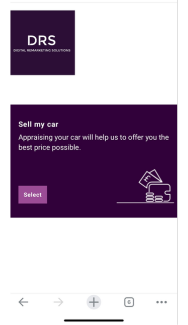
DRS improves the part exchange process by capturing condition-led vehicle data directly from the customer, remotely, at the enquiry stage. Through a guided self-appraisal, customers upload images and provide structured condition information, supported by prompts — even if they are unsure how to describe specific damage.

Crucially, this information flows directly to the dealer, keeping the customer within the dealer’s sales journey rather than allowing the part exchange conversation to drift to third-party platforms later in the process.

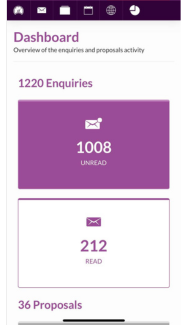
The DRS admin portal then helps dealers review each submission consistently, allowing potential issues or areas of risk to be identified early, before the vehicle arrives on site.

This allows dealers to assess reconditioning risk earlier, set more accurate expectations, and base part exchange valuations on evidence rather than assumption — reducing surprises later in the sales process.


Keep your customers engaged throughout the enquiry process.

 
Today’s car buyers expect flexibility and progress. What matters is not where an enquiry starts, but whether the customer is given a clear and motivating next step.

DRS gives customers the choice to engage in a way that suits them, allowing them to complete a guided self-appraisal in minutes, at a time and place that suits them. By keeping customers in the moment, the process maintains momentum rather than relying on call-backs or delayed follow-ups.

DRS acts as an additional engagement option within the enquiry journey, giving dealers flexibility to introduce it when it best supports momentum – without replacing existing conversations or sales processes.

This active participation increases commitment, reduces drop-off and supports smoother progression from first enquiry through to appointment or confirmed deal.

Why it matters.

 
DRS improves the part-exchange journey by strengthening control, clarity and continuity at the point where deals most often break down.

For your customer

  • One clear, joined-up journey – Part exchange and purchase are handled together, rather than across multiple platforms or disconnected conversations.
  • Convenient, guided self-appraisal – Complete a guided self-appraisal in minutes, at a time and place that suits them.
  • Clear expectations earlier in the process – Condition-led information helps set realistic expectations before visiting the dealership.
  • Greater transparency and confidence – Understanding how their vehicle is assessed builds trust and reduces uncertainty later.
  • A smoother route to completion – Fewer hand-offs, fewer delays, and a clearer path to completing their next car purchase.

For you the retailer

  • Enables you to be more aggressive in valuing the part exchange to drive down the cost to change on the new vehicle.
  • Condition-led part-exchange data directly from the customer – Gain earlier visibility of vehicle condition before the car arrives on site.
  • Higher-intent enquiries through completed self-appraisals – Customers who complete an appraisal are more committed, helping sales teams focus effort where it matters.
  • Greater control of the customer journey – Keep the part-exchange conversation within your sales process rather than allowing it to drift to third-party platforms.
  • Reduced late-stage renegotiation – Fewer surprises uncovered during physical inspection means calmer, more confident deal progression.
  • Improved margin protection – Better condition insight supports more informed decision-making around risk, preparation and deal structure.
  • Earlier triage of part-exchange suitability – Identify whether a vehicle fits your retail profile before it disrupts the customer’s new car deal.
  • Flexibility to route non-retail PX vehicles without losing the sale – Where a vehicle is not suitable for retail, dealers retain the option to route it through alternative remarketing or disposal channels while still progressing the customer’s purchase.
  • Works alongside existing systems and processes – No need to replace your DMS, CRM or valuation tools — DRS enhances what you already use.

Find out more

DRS is designed to fit naturally into the way dealers already handle enquiries and part-exchange — adding clarity and momentum without disruption.

  • Introduce DRS at the right moment – Dealers share a branded appraisal link when it best supports the enquiry — whether during an online lead, phone conversation or in-store discussion.
  • Customers complete a guided self-appraisal – Customers upload images and provide structured condition information in minutes, at a time and place that suits them.
  • Dealers review condition-led data – Submissions are reviewed through the DRS admin portal, helping teams identify potential issues and assess suitability early.
  • The deal progresses with confidence – Whether the vehicle fits retail or not, the customer journey continues without unnecessary disruption.

This approach keeps the part-exchange conversation moving forward, rather than becoming a point of delay or drift.

Guided, condition-led self-appraisal
Designed to keep enquiries moving

DRS is built for independent and franchised dealers who want greater control over the part-exchange journey without changing how they already sell cars.

It’s particularly suited to dealers who:

  • Handle enquiry-led part-exchanges across multiple channels
  • Want earlier visibility of condition and risk
  • Are frustrated by late-stage valuation friction
  • Prefer to keep customers within their own sales journey

DRS works alongside existing DMS, CRM and valuation tools, acting as an additional engagement and insight layer, not a replacement.

For dealers handling part exchange and “sell my car” enquiries who want greater control, choice and convenience

A pricing model aligned to outcomes.

DRS is designed to be self-funding for most dealers, with costs aligned to real activity rather than speculative leads or fixed volumes.

Rather than charging for clicks or enquiries, pricing is structured around:

  • Platform access
  • Completed customer appraisals
  • Genuine part-exchange engagement

This ensures dealers only pay where value is created — typically offset by improved conversion, margin protection, or retained customer journeys that might otherwise be lost.

Pricing is discussed based on dealer size, enquiry volumes and intended usage, ensuring the platform fits comfortably within existing operational budgets.

No buyer fees.
No forced routes.
No obligation to change existing systems.

Simple, outcome-aligned pricing designed to be self-funding for most dealers