How Buyer Fees Quietly Shape Vehicle Acquisition Strategy
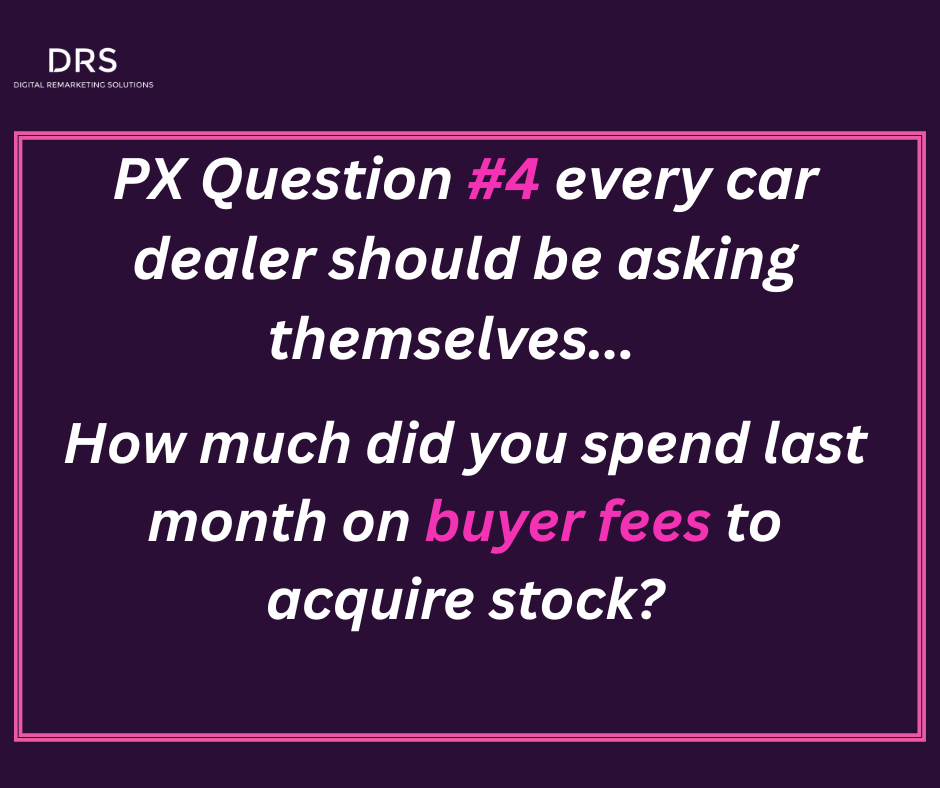
Ask most dealers how they acquire stock and one cost appears again and again.
Buyer fees.
They’ve become a familiar, accepted part of modern vehicle acquisition.
So familiar, in fact, that many businesses no longer question them.
They simply sit in the monthly profit and loss like any other operational cost.
The Cost That Became “Normal”
Over time, buyer fees have moved from occasional expense to recurring line item.
They now form part of the everyday economics of stock acquisition.
And because they’re familiar, they feel normal.
But normal doesn’t always mean optimal.
Why Familiar Costs Rarely Get Challenged
When a cost becomes embedded in daily operations, it stops being examined.
Instead, it becomes:
- Predictable
- Expected
- Budgeted for
And once something is budgeted for, it can quietly stop being questioned.
Especially when acquisition pressure is high and stock is difficult to source.
The Real Scale of Monthly Buyer Fees
Across a month, buyer fees can represent a significant investment.
Spread across multiple purchases, they become:
- A recurring overhead
- A fixed acquisition cost
- A permanent reduction in margin
Yet because they are paid per vehicle, they rarely feel like a single large number.
They feel like many small, unavoidable ones.
Every Cost Is Also a Strategy Decision
This is where perspective matters.
Every recurring cost is not just an expense.
It is also an investment decision.
It represents a choice about:
- Where opportunity comes from
- How vehicles are sourced
- Which channels receive ongoing spend
And over time, those choices shape acquisition strategy.
The Question Worth Asking
Rather than asking whether buyer fees are good or bad, a more useful question is:
How much do we spend each month on buyer fees to acquire stock?
Seeing the total number often creates a moment of reflection.
Because totals have a way of changing perspective.
Cost vs Control
Buyer fees don’t just represent cost.
They represent dependency on specific acquisition routes.
The more a business spends in one channel, the more that channel shapes how stock is sourced.
Over time, this influences:
- Buying behaviour
- Resource allocation
- Strategic focus
Often without being consciously planned.
From Habit to Intention
The goal isn’t to eliminate buyer fees entirely.
They play an important role in modern acquisition.
But understanding their true scale allows decisions to move from habit to intention.
From automatic spend to strategic choice.
A Simple Reflection
Most dealers track how many vehicles they buy.
Fewer regularly review the total cost of how they buy them.
Which leads to a useful reminder:
Every cost is also an investment decision.
If you’d like to see how condition-led self-appraisal can support part-exchange conversion and help you retain more acquisition opportunities, we’d be happy to show you how the DRS platform works.